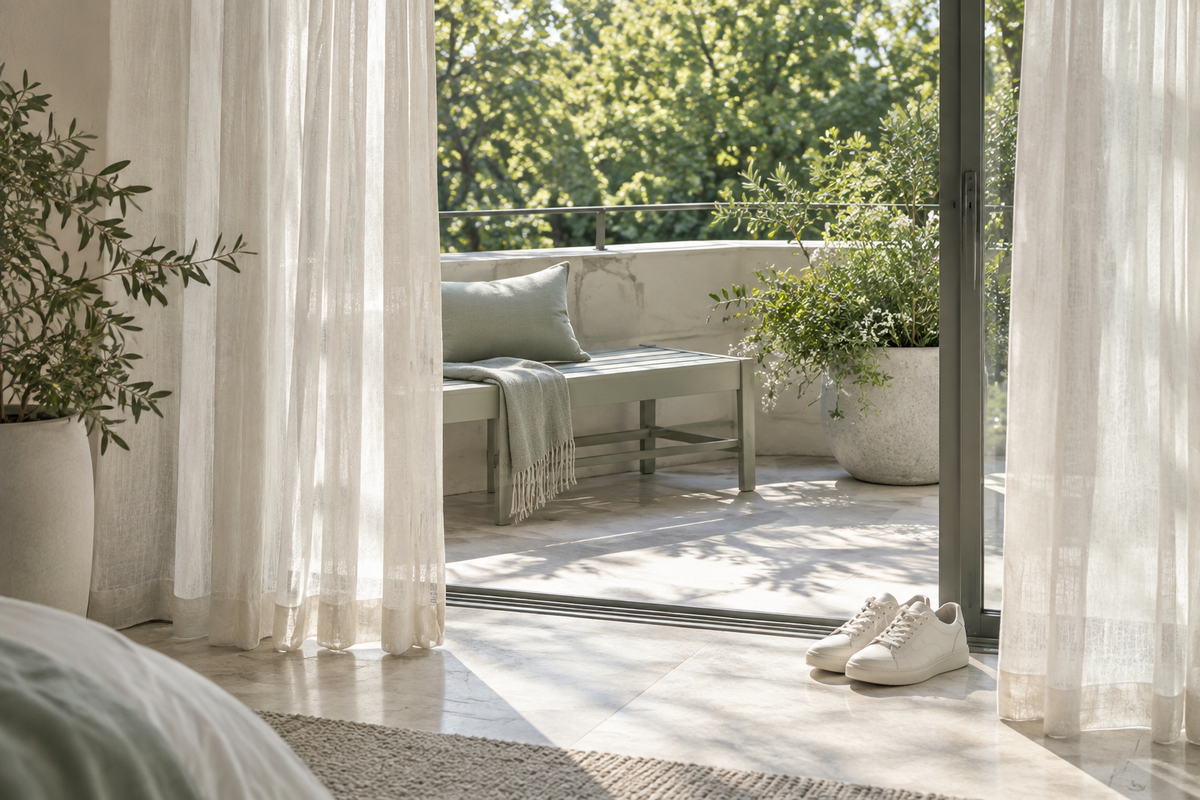
Quick answer Making room for daylight in the morning can be part of a clearer distinction between your daytime and evening routine. There is no single number of minutes that suits everyone. Start by finding an opportunity to go outside that fits the morning you actually have.
Your sleep routine starts before bedtime
Getting ready in a rush, spending the day in an office and returning to a brightly lit living room can leave little room for an intentional start to the day. If you have been focusing entirely on bedtime, your morning is another part of the routine worth considering.
NIH’s explanation of circadian rhythms describes light and darkness as important environmental signals for our roughly 24-hour biological rhythms. These rhythms influence sleep timing. A morning habit belongs within that wider pattern, rather than being a stand-alone fix for a difficult night.
This guide is for adults aiming to sleep at night and be awake during the day. If you are returning from a night shift and preparing to sleep, do not apply the same plan. Light timing needs a different approach.
Choose a morning option that fits
NHLBI includes spending time outdoors each day, when possible, among healthy sleep habits. Try attaching that opportunity to something already in your day
- Working from home Choose a moment before your first meeting for stepping outside or walking around a nearby street. If you tend to forget once the laptop is open, leave your shoes ready the night before.
- Commuting If safe and practical, walk a small part of your journey. Avoid a plan that makes you rush or arrive late.
- Caring for someone in the morning Look for an existing opportunity to go outside together rather than adding another separate task.
- Unable to go out Opening the curtains or eating breakfast in a bright part of the home can still mark the start of your day. Do not assume this provides the same light exposure as being outdoors.
You do not need to look directly at the sun. Continue following the eye and skin protection advice that applies to you. This is not a light-therapy protocol or advice to change a medicine or buy a treatment device.
Try a low-pressure week
This is an original EPIDEN planning exercise, not a clinical protocol or a promise of better sleep. Its purpose is to find a start to the day you can comfortably repeat.
- Day one Write down your usual wake-up time and the easiest opportunity to leave the house. Choose your real schedule, not an aspirational early start.
- Days two and three Try that opportunity. A cue such as “a short walk after breakfast” is enough; you do not need to chase a precise duration to claim a biological effect.
- Day four Notice what got in the way. If rain, meetings or an unsafe route made the idea impractical, change the option. Missing a morning does not cancel the experiment.
- Days five and six Repeat the version that fitted best. Observe one habit instead of changing your coffee intake, exercise and bedtime at the same time.
- Day seven Ask, “Could I keep doing this?” Add a few words about how the morning felt and when you noticed sleepiness in the evening.
A sample note. “Woke at 8, walked part of my commute. It fitted my morning. Felt sleepy around my usual time.” This is an observation, not a score. For a more detailed record, use our sleep diary guide.
If you would also like a manageable end to the day, our evening routine guide can help you plan it.
Common questions
How many minutes of daylight do I need?
These sources do not justify a universal duration for every season, location and person. The practical goal here is to create an achievable daily opportunity, not meet an invented number.
Will my sleep improve in a week?
We cannot promise that. A week helps you assess whether the habit fits your life; it cannot identify the cause of a sleep problem.
What if I sleep enough but still feel tired?
CDC highlights sleep quality as well as duration. Persistent sleepiness or regular sleep problems deserve a conversation with a healthcare professional, such as your primary care clinician.
Sources and further reading
Sources checked on 11 September 2026. The weekly exercise and sample notes were created by EPIDEN.
- NIH / NIGMS, Circadian Rhythms Light, darkness and biological rhythms.
- NIH / NHLBI, Healthy Sleep Habits Outdoor time and daily habits.
- CDC, About Sleep Sleep quality and seeking help.